With the continuous upgrading of autonomous driving technology, more "smart cars" will drive on the "smart road" in the future.
CCTV News:Nowadays, many places are stepping up the construction of autonomous driving demonstration zones, and there are more and more test roads for opening autonomous driving. People have been able to experience the scientific sense of autonomous driving.
On the 19th of last month, the second batch of self-driving test roads with a total length of 205 kilometers were opened in Pudong New Area, Shanghai. So far, Shanghai has opened a total of 1,003 autopilot test roads, with a total mileage exceeding 2,000 kilometers.
Journalists experience driverless driving.
Driverless cars are really getting closer and closer to us. What expectations and concerns do you have about driverless driving? Our reporter conducted a random interview in the street. Let’s watch it together.
For new things, some people expect and some people are worried. The reporter found that netizens’ discussion on autonomous driving has also continued. Some netizens think that driving itself is a kind of fun and cannot be completely replaced by automatic driving. In the future, I hope that I can choose my own driving mode according to the scene. Some netizens also said that the era of autonomous driving may save people the trouble of taking a driver’s license; Some netizens are worried about the maturity of autonomous driving technology.

The reporter came to Pudong Jinqiao Intelligent Networked Automobile Demonstration Zone, which is the first open test road area for self-driving cars in the central city of a super-large city in China. Here, self-driving vehicles can complete driving by themselves without human intervention at all.
All-round test in real environment strives for automatic driving safety
The newly opened 205km self-driving test road in Pudong, Shanghai also covers some high-speed sections, which not only enriches the test scenarios of self-driving vehicles, but also collects test data on the platform to provide a basis for entering the next stage.
In the automatic driving test area, the monitoring terminal of the test vehicle will upload the vehicle speed, location, driving state and other information to the supervision platform in real time, and the data collected by the platform such as vehicle test mileage, duration and manual takeover rate will be used as the basis for the vehicle to obtain the license for the next stage such as demonstration application or demonstration operation.

Lin Yu, general manager of Shanghai Jinqiao Intelligent Networked Automobile Development Co., Ltd. said: "At present, in Jinqiao, most of the test vehicles are L4-class. This is also because there is special legislation for drivers in Pudong New Area, so the self-driving vehicles that can take the lead in breaking through L4 and above can be tested and subsequently applied."
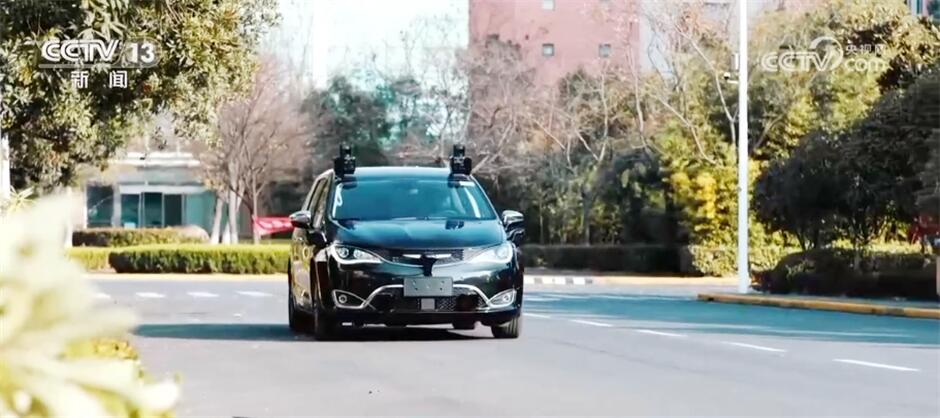
The relevant person in charge of the Shanghai Municipal Transportation Commission said that the expansion of the self-driving open test road will further improve the corresponding evaluation standards and supervision system, and more "smart cars" will drive on the "smart road" in the future.
News link: Automobile driving automation is divided into 6 levels.
When talking about self-driving cars, we usually see concepts such as L1 and L2. What does this mean? A knowledge point is popularized here: According to the Classification of Automobile Driving Automation issued by the Ministry of Industry and Information Technology, according to the regulations, driving automation can be divided into six levels, from L0 to L5. L0 to L2 are emergency assistance, partial driving assistance and combined driving assistance respectively, and people still play a leading role in the automobile.
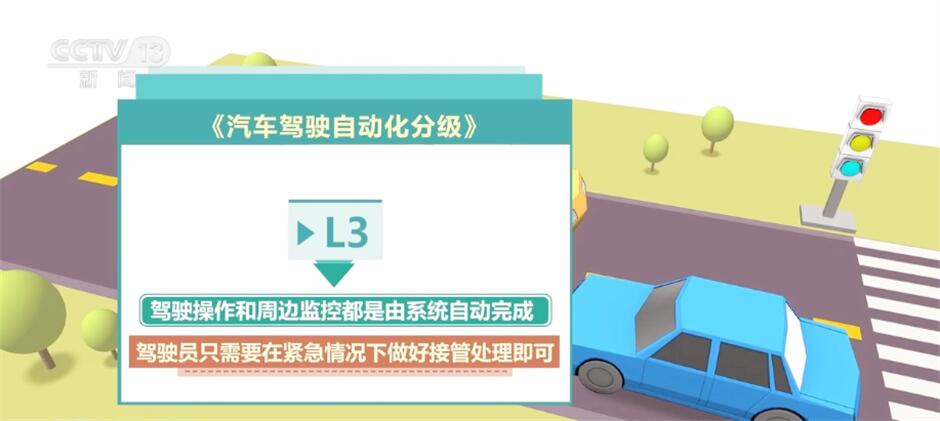
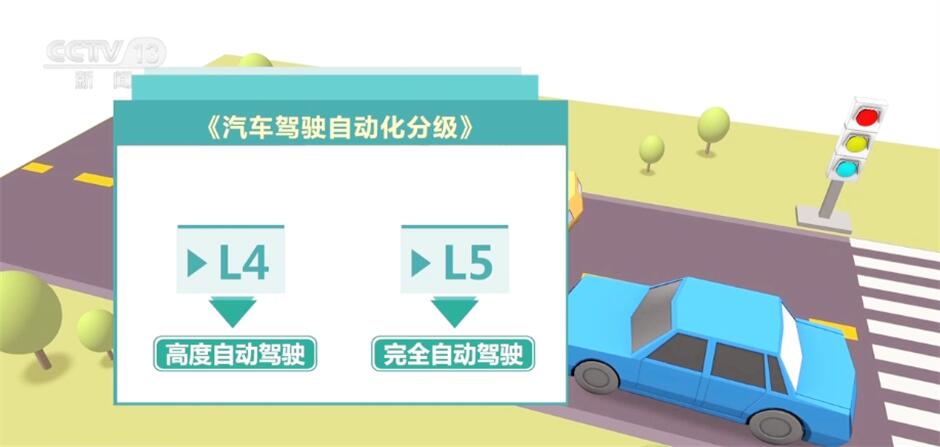
Starting from L3, the driving operation and peripheral monitoring are automatically completed by the system, and the driver only needs to take over in an emergency. L4 means highly automatic driving, while L5 means fully automatic driving.
Auto-driving technology is constantly upgrading, and vehicle-road collaborative acceleration pilot.
Before entering the commercial operation stage, self-driving vehicles have to pass the tests of different stages, such as road test, demonstration application and demonstration operation. In the face of various challenges, which technologies silently provide support behind them? Through the iteration of technology update, what are the development achievements of relevant enterprises at present? Continue to watch the reporter’s report.
Lin Tailai, the person in charge of an autonomous driving technology enterprise, said: "The whole vehicle is equipped with 50 high-definition sensors, including 28 cameras, 6 laser radars and some millimeter-wave radars, which realize the ability of 360-degree redundant perception of the surrounding environment, so that intelligent driving cars can identify and analyze the vehicles, pedestrians and surrounding environment on the road in real time."
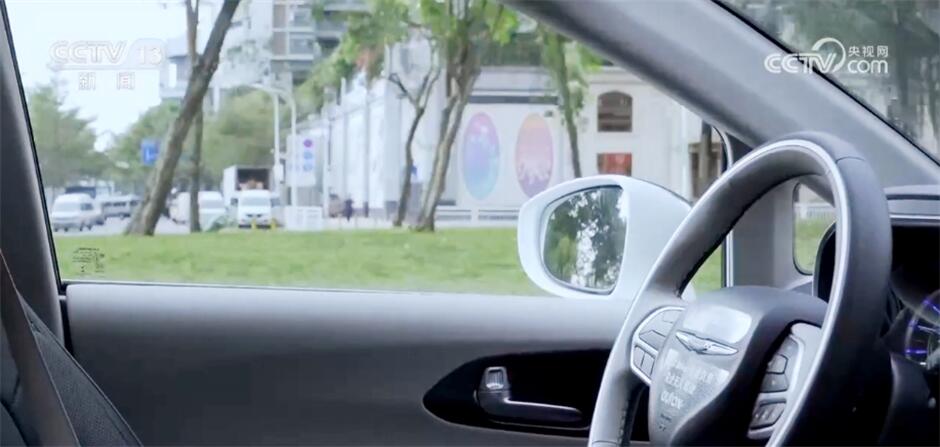
Autopilot technology involves many fields such as transportation, communication, electronics, etc. While bicycle intelligence continues to make breakthroughs, the related technologies of vehicle-road coordination are also constantly "upgraded". The 5G-A vehicle networking demonstration route opened in Shanghai Jinqiao Intelligent Networked Vehicle Demonstration Zone has realized the verification of all elements of vehicles, roads, networks, clouds and maps, and escorted self-driving vehicles.
How far is high-level autonomous driving from us?
The integration and innovation of vehicles, roads, clouds, networks and maps has enhanced the accuracy and completeness of autonomous driving information perception and better served the future. So in daily life, how far is the average consumer from the automatic driving above L3 level?
In Jiading, Shanghai, people can already call the autopilot network to get a car through taxi software.
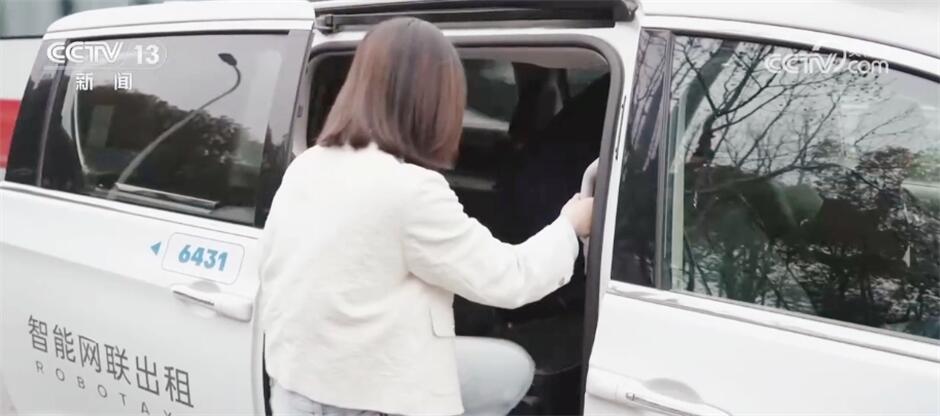
Professor Tu Huizhao from Tongji University in Shanghai introduced that by the end of 2023, the test mileage of self-driving vehicles in China had exceeded 70 million kilometers. Autopilot technology not only provides convenience for people to travel, but also drives the construction of new integrated infrastructure.

Tu Huizhao, a professor at Tongji University’s School of Transportation Engineering, said that because autonomous driving is a new technology, it will have a revolutionary impact in terms of transportation mode and travel experience, and it will also drive the integration of new infrastructure. Now the infrastructure is so huge. Maybe autonomous driving will upgrade these traditional infrastructures. Autopilot technology will bring some new industries, such as intelligent transportation industry may increase on a large scale.