The sting is coming! Are you ready for spring ploughing, returning to work and resuming production?
Spring thunder rings, everything grows, and when the fierce battle against the COVID-19 epidemic is in full swing, we have ushered in the third solar term of the year-fright.
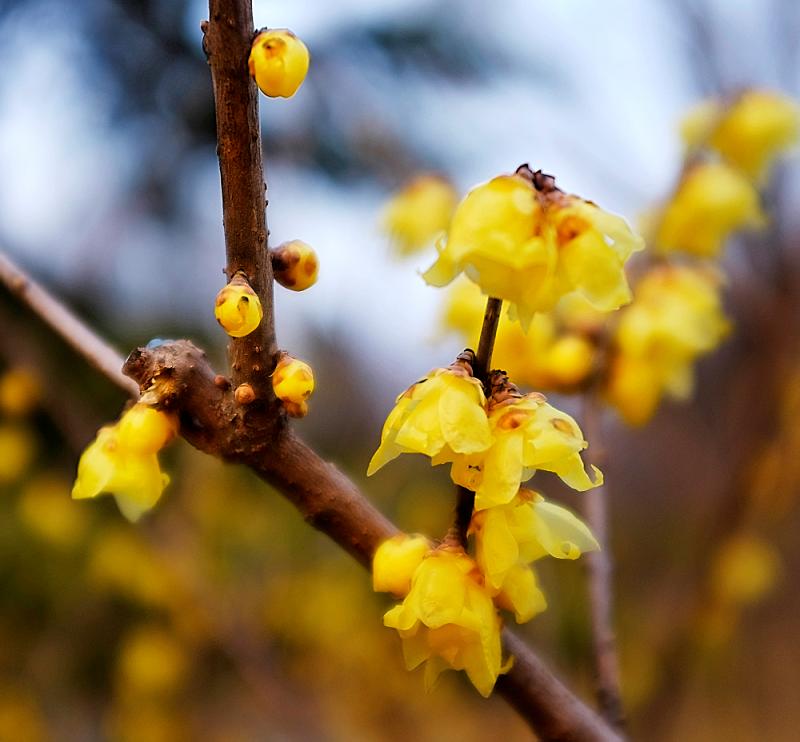
Image source: Pictured Beijing photographer Liu Hongyang
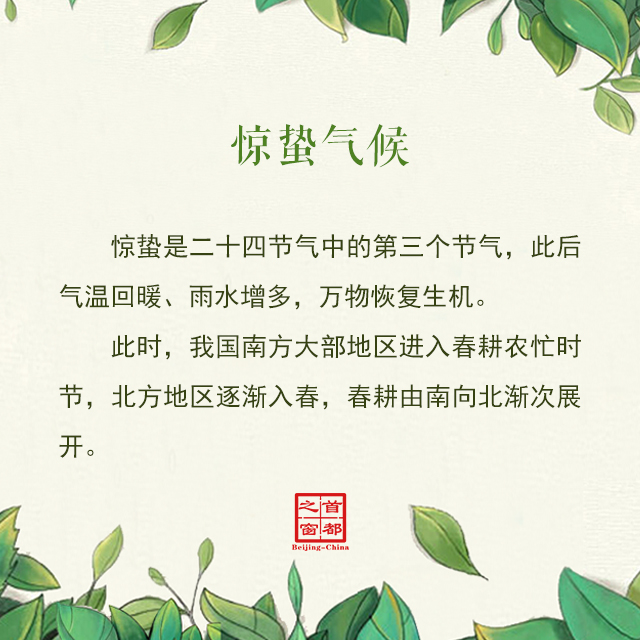
Startling, called "starting to sting" in ancient times, means that the weather is getting warmer at this time, the spring thunder begins to sound, and the hibernating insects in the underground are awakened and wander around, which is between March 5 and 6 every year, and this year is March 5. In the twenty-four solar term written by Wu Cheng in Yuan Dynasty, it was recorded that: "On February Festival, everything was shocked, and the shock was thunder, so it was called a shock. It’ s a cockroach that ran away. " In fact, insects can’t hear the thunder. spring returns, the warming weather is the reason why they end their hibernation and "run away in surprise".
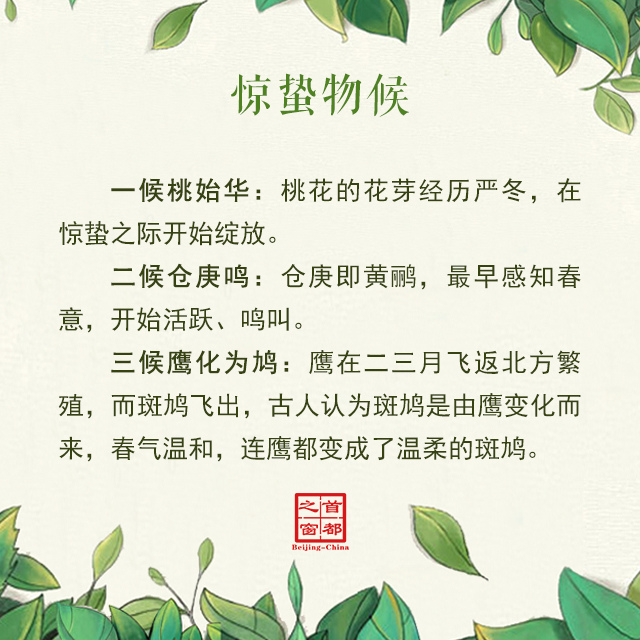
In ancient China, fright was divided into "three phases". When the peach blossoms begin to blossom, when Cang Geng sings, and when the eagle turns into a dove, it vividly describes the early spring scene of peach blossom red, Oriole calling and Yan Fei coming during the period of fright with natural phenomena.
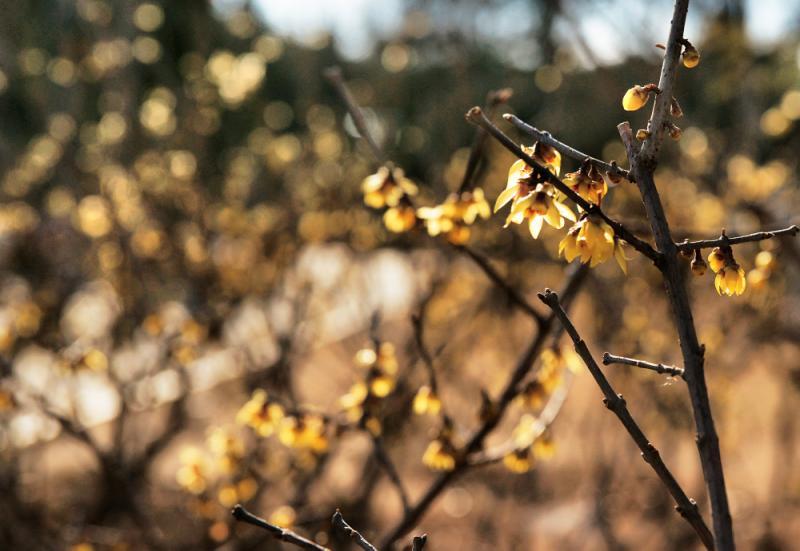
Image source: Pictured Beijing photographer Liu Hongyang
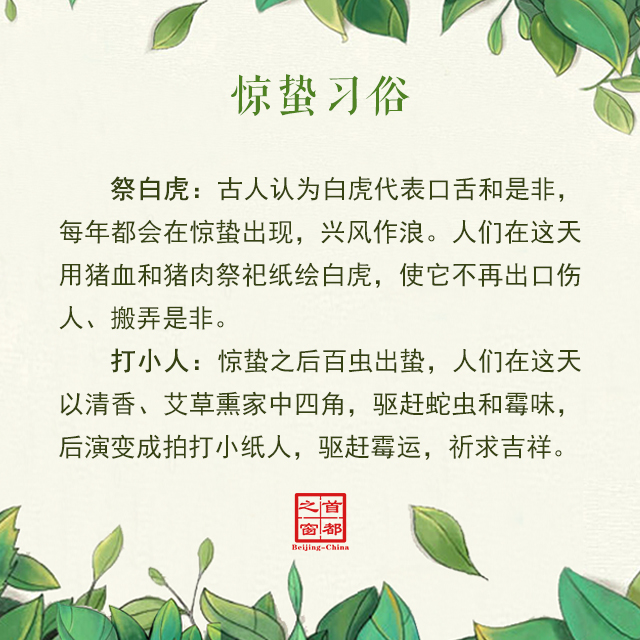
After the fright, everything recovers, which is the season of spring, but also the season of various viruses and bacteria being active. The result of "spring thunder scares a hundred insects" may be the occurrence and spread of various pests and diseases. Therefore, in ancient times, people would hold fragrance and wormwood and smoke the four corners of their homes to drive away snakes, insects, mosquitoes, rats and musty smells with fragrance, and even gradually evolved into the habit of slapping people who are unhappy and driving away bad luck, which is the folk custom of "beating villains". There is also a custom of "eating pears in shock" among the people, which means that disasters and diseases are far away. There are also various food customs all over the country on the day of fright. In some areas of Shandong province, many farmers have to make pancakes in the courtyard, which means that the smoke kills pests and the crops can grow smoothly and have a good harvest. In some rural areas of Shaanxi province, people will put the dried soybeans soaked in salt water in the wok and stir-fry them, making them make a "crackling" sound, symbolizing the jumping sound of insects when they are heated in the wok, and then the whole family will eat the fried soybeans. In the Yao nationality in Guangxi, every family will eat fried corn on the day of being shocked, which is called "eating fried insects". After the "insects" are cooked, they will be placed in the hall, and the whole family will sit around and munch and eat, and they will shout: "Eat fried insects, eat fried insects!" There will be a competition in the fun place. Whoever eats fast and chews loudly will be congratulated for his contribution to eliminating "pests".
"Spring ploughing can’t rest after the Scaring Festival."
Before and after the fright, the weather began to warm all over the country, and the rain gradually increased, and the vast rural areas also entered the spring ploughing season.

Image source: Pictured Beijing photographer Liu Hongyang
Since ancient times, the working people in our country have attached great importance to the solar terms of fright and regarded it as the day when spring ploughing began. There is a saying in agricultural proverbs that "spring ploughing can’t rest after the festival of fright", and "scaring black cattle to plow" is the starting gun for the beginning of spring ploughing production, which is an important ceremony in ancient times.
Although the sudden epidemic has brought many challenges to the spring ploughing and preparation this year, spring ploughing and preparation have already started all over the country, and the vast Yuan Ye is busy, depicting the background color for the bumper harvest.
"Spring thunder scares all insects" to prevent the outbreak of epidemic disease when resuming work and production.
According to the modern epidemiological investigation, it is confirmed that the period before and after the fright is the high season of liver diseases, and diseases such as influenza, epidemic cerebrospinal meningitis, chickenpox, herpes zoster and epidemic hemorrhagic fever are also easy to break out in this solar term. Therefore, we should continue to fight against the COVID-19 epidemic and guard against such diseases.
At present, it is very important for all localities to resume work and production, and do a good job in epidemic prevention and control in public places to consolidate the previous prevention and control achievements and prevent the epidemic from rebounding.
Regarding strengthening the prevention and control of the epidemic situation after the resumption of work, Zhong Nanshan has two suggestions. One is to strengthen the detection of personnel, especially in personnel-intensive enterprises. When employees come, they must receive double medical tests, one is nucleic acid testing and the other is IgM testing; Second, all factory tap water, toilets and sewers must be kept unobstructed. This is confident to ensure the safety of returning to work and production.
"Before the thunder and the fright", reverence for nature starts with the protection of wild animals

Image source: Pictured Beijing photographer Liu Hongyang
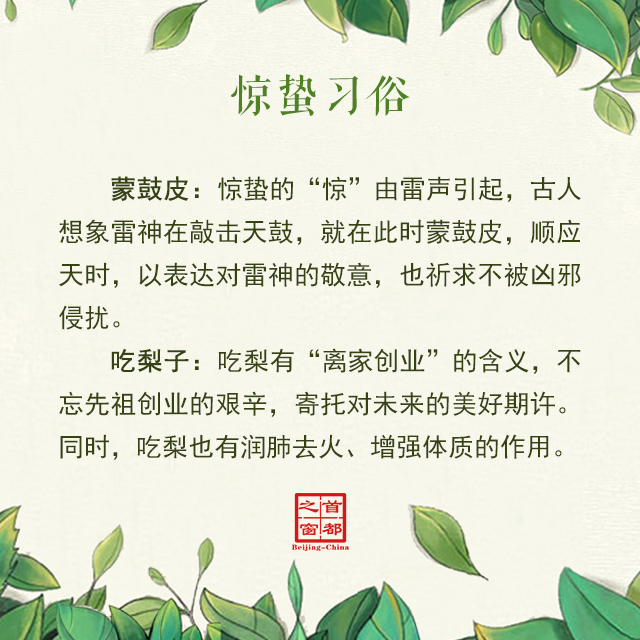
The ancients thought that the fright was caused by thunder. Legend has it that Thor is a bird’s beak, a winged god, holding a hammer in one hand and hitting many drums around him with one hand, giving off rumbling thunder. Therefore, there is a custom among the people to be shocked and hide their skin, which also reflects the cultural pursuit of harmonious coexistence between man and nature in farming civilization. (Zhang Wei Kong Fanxin)